
Wandering Jeans #6
What Creates an Expat/Digital Nomad Hub? On Chiang Mai and ... Otaru?

Chiang Mai is the ultimate expat/nomad hub. I’d rather be wrong than certain about this.

One of the things I’ve been wondering since I got here is how cities become expat/nomad hubs.
Not places where expats happen to live. Those are everywhere. I mean the places where someone lands with a backpack, knows nobody, and somehow has a circle of friends by the end of the week. The places where people don’t just come for a month. They come for a month, then quietly cancel the flight home.
Personally, I’ve never seen anything quite like Chiang Mai. I’ve heard Da Nang and Bogotá are incredible too, but it’s hard for me to imagine they eclipse this.
The thing that really got me thinking wasn’t the number of foreigners. It was how many of them told me they’d moved here without ever visiting first.
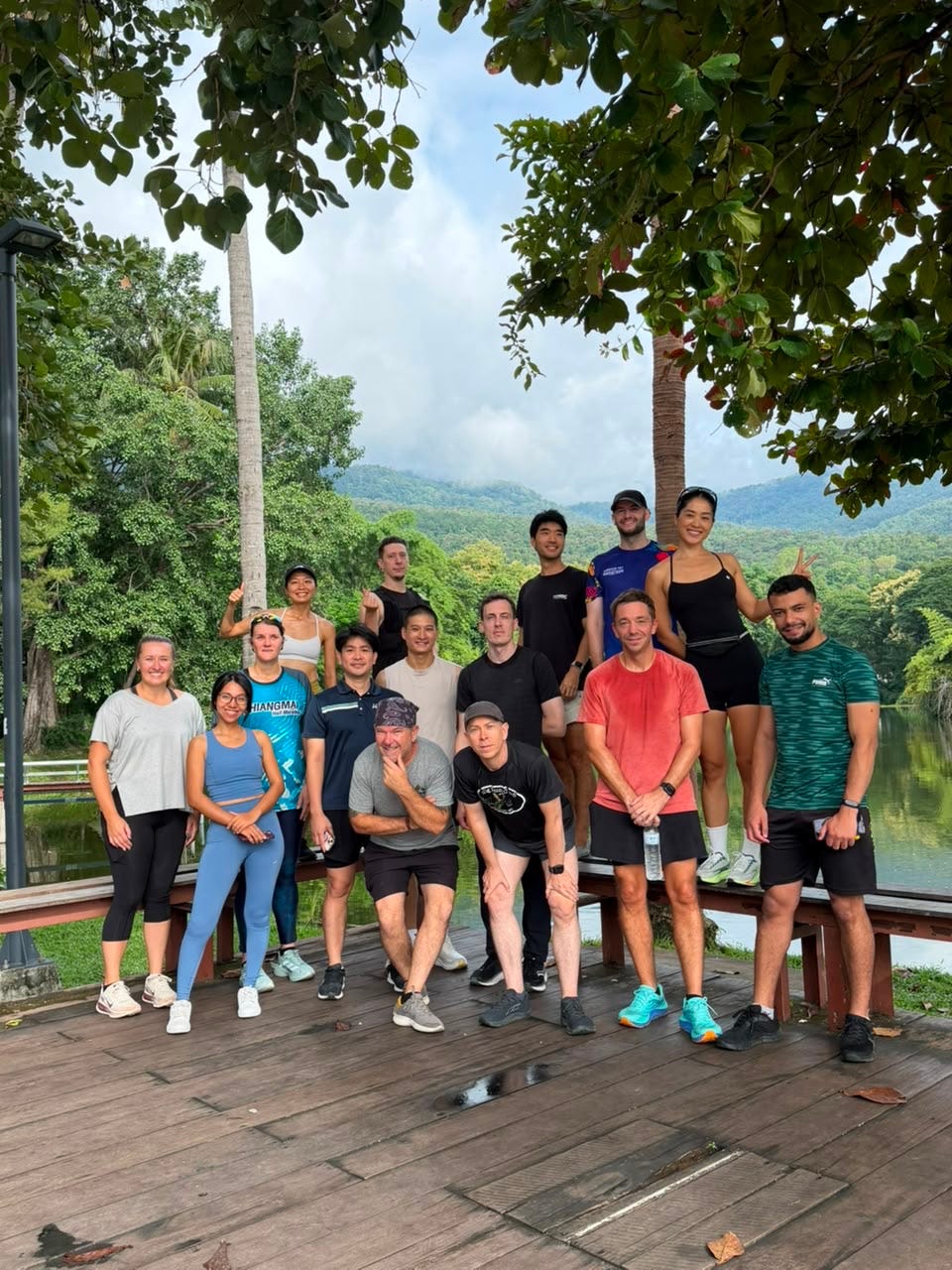
I’ve met at least a dozen people in the last two days who did exactly that. Not backpackers who decided to stay longer. People who packed up their lives somewhere else, got on a plane, and hoped everyone on the internet wasn’t lying.
Every time someone told me that, I thought the same thing.
“That’s insane.”
The strange part is that none of them seemed to think it was. I’ve asked a few of them why. The answers are all same same but different.
Some heard about Chiang Mai from YouTube or Instagram. Some from Reddit. Some from friends. One Russian guy said he heard about it in the South American jungle from two separate people. Some because they’d heard it mentioned so many times that it almost stopped feeling like a decision.
I keep asking people how long they’ve been here. Two weeks. Six months. Three years. “I came for a month.” “I never left.” After you’ve heard that enough times it starts sounding less like coincidence and more like a pattern, although I can’t tell if it’s a pattern in Chiang Mai or a pattern in the people who choose it.
At some point you’re not moving to a city. You’re moving to everyone else’s experience of that city. I’m still trying to figure it out.
Yesterday a 36-year-old digital nomad from the UK said something that has been rattling around in my head ever since.
“The living here is easy and good.”
I think that’s exactly right.
Meals are cheaper to buy in restaurants than they are to cook yourself. I still find that hard to get used to. Instead of everyone disappearing home after work, people stay out. Cafés are busy. Restaurants are busy. Conversations happen.
Then there are the communities. You can run with a group in the morning, go to an AI meetup in the afternoon, dance tango in the evening, and if none of those appeal to you, there are another twenty things happening instead.
I’ve never seen another city where it felt so easy to meet people.
I like it here. A lot.
Everyone else seems to like it here too. Which is exactly what worries me.
If you spend any time searching online, you’ll find article after article saying Chiang Mai has been ruined. You’ll find the same arguments about Bali. About Portugal. About Mexico City. About Malaga and Valencia. Never mind Barcelona. Niseko in Japan is another one.
The story is almost always the same.
Foreigners arrive. Rents go up. The city changes. Locals get pushed out. Then the next “best place” appears somewhere else and the cycle starts again.
The more I walk around Chiang Mai, the harder I find it to think about this in black and white.
There are expats in virtually every restaurant I pass. They’re renting apartments. They’re filling cafés. They’re taking cooking classes. They’re learning Thai. They’re joining (and creating) hiking groups. They’re keeping businesses busy on an afternoon in the middle of the rainy season.
It’s hard to look at that and pretend there aren’t real benefits. It’s harder to pretend there aren’t real costs.
I honestly don’t know where the balance is. Maybe there isn’t one.
One thing Chiang Mai has going for it, oddly enough, are the negatives. Burn season is brutal. For a couple of months the air quality can be among the worst on the planet. The hot sticky summer season isn’t exactly gentle either. There’s no beach. No ocean breeze. All of those are a terrible advertisement for the city.
Yesterday I found myself wondering whether those are actually part of the reason Chiang Mai hasn’t completely tipped over. People leave. Then they come back. Or they don’t.
Maybe every successful expat city needs a reason not to stay all year. As ridiculous as that sounds, I can’t quite shake the thought. There needs to be a reason to leave.
This whole line of thinking has very little to do with Chiang Mai anymore. It has me thinking about Otaru. Otaru isn’t an expat hub. Not even close. Although thirty miles away, Niseko is. In Otaru, there are only a handful of us.
To be honest, before coming here I probably would have said that’s a good thing. Now I’m not so sure. Like I said, I like it here.
Some of the old-school expats in Otaru hate the idea of the city attracting more digital nomads. I understand why. Nobody wants to watch a place they love become another case study in rising rents and overtourism.
But after walking around Chiang Mai for the last few days, I also can’t ignore the other side of the equation. Those people sitting in cafés with laptops aren’t just taking. They’re buying lunch. They’re renting apartments. They’re keeping small businesses alive. They’re staying long enough to become regulars instead of tourists.
That’s a very different kind of foreign visitor.
I don’t know what the right number is. Maybe every city that gets this right eventually gets it wrong. Or maybe cities don’t get ruined because people discover them. Maybe they get ruined because they become too easy to discover.
I’ve started wondering whether you can spot these places before they become hubs. Not because I want to publish a list. The internet has already done enough of that. I’m just curious whether they all look more or less the same before everybody notices them. A university. Good internet. Walkability. Affordable rent. Enough cafés that people naturally keep running into one another. Maybe that’s the recipe.
It definitely helps to have a university and youth culture. Otaru fails here in that the youth culture happens mostly in Sapporo even though the students go to school in Otaru, they live in Sapporo, mostly.
Cafe culture is more important than it sounds. Not Starbucks or the South Korean places you order and go. Places you sit and work. Enough people that you don’t feel alone, but not so many that you’re anonymous. But then it’s nice to be able to be anonymous, to not stand out because you are a foreigner sitting in a cafe.
I don’t know if any of this is just exhaustion from India and from being sick, but it feels really good to stop moving for a while. Not for the first time, I find myself resenting that I can’t just park myself in Otaru indefinitely. That’s probably the thing that keeps Otaru from turning into something like Chiang Mai. There’s friction about being there long term.
The irony is that, with Thailand’s digital nomad visa, I could just park here until December if I want to.
Except, my house is in Hokkaido.
Winter is coming. {queue Game of Thrones theme}
I need to get back to Otaru to prepare it and then actually live in it through the snow season. A week ago, that felt obvious. Now it feels... complicated. Not because I suddenly like Japan less. I still love it there. It’s because I hadn’t realized that maybe I want a season in Chiang Mai too. Not another burn season though.
This season feels pretty close to perfect. There’s enough rain to keep everything green, but the big tourist crowds are still another month or so away. If I come back next year, October to early December feels about right.
We’ll see. Prepare my house in summer and go back when winter hits. Miss the autumn.
In two days I’ve met people from every inhabited continent, except Antarctica. Somehow that already feels completely normal. Maybe that’s the answer to the question I started with.
I’ve been trying to figure out how cities become places that people move to without ever seeing first. I’m starting to have a feeling the answer has a lot less to do with cities than it does with people. My essays about the Wanowan Culture are really about the same thing. Maybe that’s the key. All those people who pulled up their stakes and moved West until they couldn’t go further. Why did they stop where they stopped?
What is it about people that makes them move to a place they’ve never been and stay there?